




Underwater meadows: Jillian Ooi merges science and art to save seagrass
MALAYSIANSKINI | Marine scientist Jillian Ooi never expected to be chosen as one of six researchers from around the world to receive this year’s Pew Marine Fellowship.
First of all, her topic of research is on seagrass meadows, which she acknowledged is “not a sexy thing”, especially when compared to scientists studying the much more widely-appealing marine animal conservation.
Secondly, Ooi, who is also artistic and music director for contemporary gamelan ensemble Rhythm in Bronze, said she could not resist “slipping in some music work” into her submission for the Pew Marine Fellowship.
She said she had proposed creating what she described as a “multi-disciplinary gamelan piece” to raise public awareness of the importance of seagrass meadows, which serves as a nursery for juvenile fish and feeding grounds for animals such as dugongs, turtles and seahorses.
MALAYSIANSKINI | Marine scientist Jillian Ooi never expected to be chosen as one of six researchers from around the world to receive this year’s Pew Marine Fellowship.
First of all, her topic of research is on seagrass meadows, which she acknowledged is “not a sexy thing”, especially when compared to scientists studying the much more widely appealing marine animal conservation.
Secondly, Ooi, who is also artistic and a music director for contemporary gamelan ensemble Rhythm in Bronze, said she could not resist “slipping in some music work” into her submission for the Pew Marine Fellowship.
Ooi had proposed creating what she described as a “multi-disciplinary gamelan piece” to raise public awareness of the importance of seagrass meadows, which serves as a nursery for juvenile fish and feeding grounds for animals such as dugongs, turtles and seahorses.
“I actually didn’t think this gamelan thing would get through because usually, I see Pew fellowships are very science-based. But I thought if I never try, I would never know, so I slipped in some music work.
“I thought to myself when you create a work of art, whether it is theatre or dance or song, it really affects people a lot – people actually feel sad or happy or angry, so performing arts is really powerful.
“I feel that if I want to create awareness with seagrass, I should do more than science, so I thought maybe we can create a multi-disciplinary gamelan piece to tell the narrative about the value of seagrass to Malaysians, fisherfolk and local villagers,” she said in an interview with Malaysiakini recently.
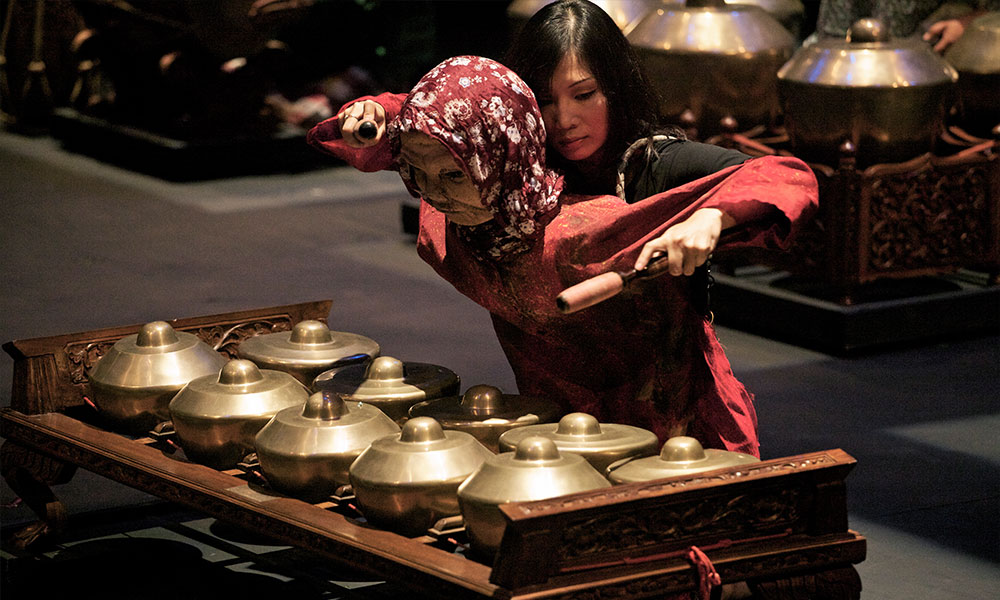
The fellowship, which Ooi received in late March for her seagrass research, comes with a US$150,000 grant for three years. Two of the other five Pew Marine Fellowship recipients are from the United States, while the remaining three are from Indonesia, India as well as Trinidad and Tobago.
Science and community
Aside from the gamelan piece, the 50-year-old shared that she plans to deliver two other main work packages under the fellowship that encompass “science” and “community” aspects.
Seagrass meadows are in decline all over the world and efforts to replant seagrass only have a success rate of about 37 percent, which is worse than the success rate of restoring coral reefs or mangroves, she said.
“One of the reasons is when you replant seagrass, they will usually grow very well at first and look very good for the first eight to 10 months, then they will disappear and it is because their roots do not grow well.
“We cannot see their roots, so we don’t know if they are growing well or not. The roots underneath do not grow fast enough or deep enough so, by the time the monsoon comes, it just gets swept away and then it is bare ground again.
“With my work, I want to understand what kind of conditions can we give to seagrass so that their roots grow well,” she explained, adding that this will involve field and lab work.
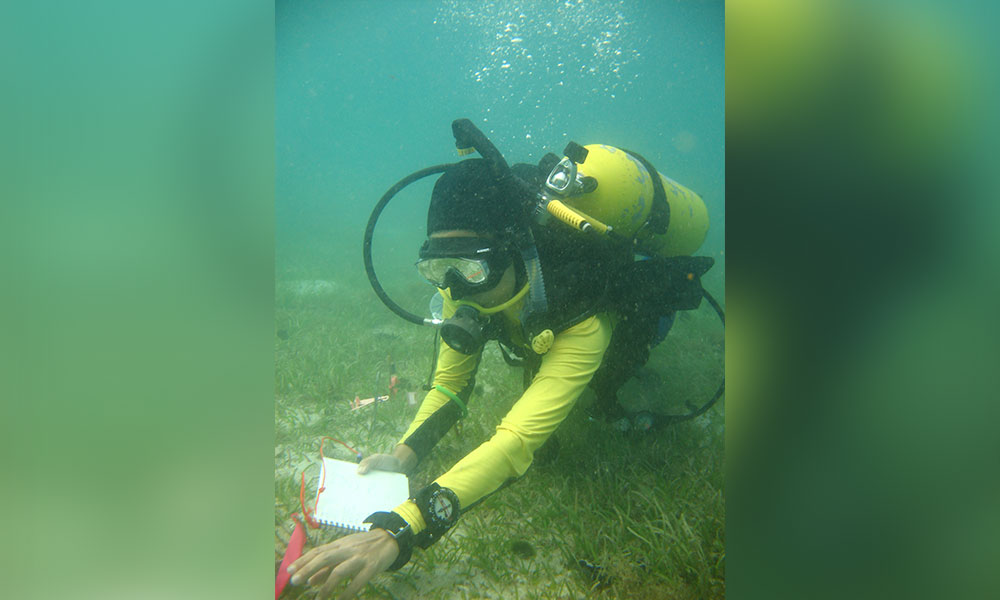
Ooi also believes that it is important to work with and learn from local villagers when it comes to marine conservation, which is where the community aspect comes into play.
“I feel in Malaysia, there is a very big separation between scientists and the public. Scientists usually think we know everything but that is not the case.
“A lot of times, it is the boat operators, the fisherfolk, who know more about the marine environment than the scientists,” she said, recalling how the locals would silently laugh at the urban scientists who think they know it all.
As such, she wants to hold workshops with villagers in Gelang Patah, Johor, to explain the problem with seagrass restoration and ask them for ideas as they may have better solutions.
“I call that traditional ecological knowledge so I want to work with them to find out better ways of restoring seagrass,” she added.
Ugly duckling of the marine world
The senior lecturer at Universiti Malaya (UM) has been researching seagrass meadows since 2005 when UM worked with the United Nations Development Programme (UNDP) to track the existence of dugongs in Johor.
During her involvement with that project, she spent a lot of time in seagrass meadows looking for dugong feeding trails and it was then she discovered the beauty and importance of seagrass meadows, which she says is often dismissed even by other scientists.
“People think that (seagrass) is the ugly duckling of the marine world, they think it is useless, but I could see its beauty and I could see how very important it was, not just for dugongs, but for the fish as well.
“I thought it was mind-boggling that we don’t know very much about seagrass, so I started getting drawn to it, this thing that everyone disregards.
“I got into it because I like looking and studying things that maybe need a voice, that people are not interested in it, and that was seagrass,” she said.
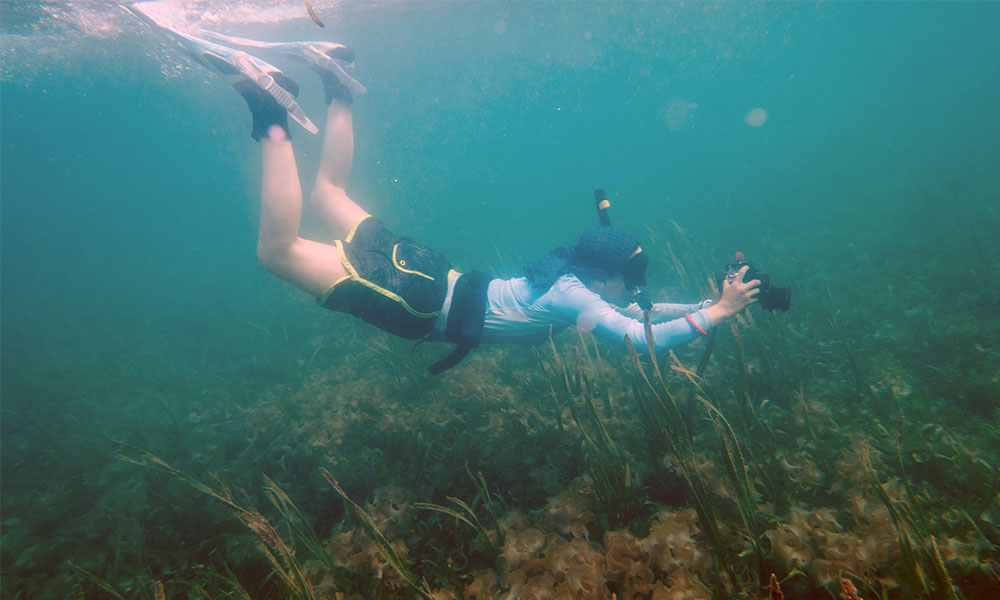
Ooi said at one point, she was so frustrated by the lack of attention on seagrass meadows compared to her husband’s research on the well-beloved coral reefs, that she made a bet with him to test whether fish prefer being in coral reefs or seagrass meadows.
“We put down GoPro cameras in corals and seagrass and what we found was amazing.
“We found that although it is true coral reefs have more fish than seagrass meadows, the latter had much more juvenile fish. So seagrass meadows were the kindergarten of the sea.
“Without seagrass meadows, then you also can’t have the fish in coral reefs, so it was amazing for us to see the relationship between the two ecosystems,” she explained.
This also inadvertently revealed the importance of seagrass meadows in producing a sustainable source of seafood, which gained seagrass conservation more attention in Malaysia “because Malaysians love seafood”, she added.
Stumbling into gamelan music
Before Ooi found her passion for seagrass research, her first love was music and she said she grew up playing all sorts of instruments like the piano and the guitar.
But when she accidentally stumbled into playing the gamelan, she fell in love with it and never looked back.
“I remember following my boyfriend at the time for rehearsals (at Rhythm in Bronze) because he was the drummer and I thought I was just going to sit there and watch.
“But then (Rhythm in Bronze founder) Sunetra Fernando said ‘nope, in gamelan, nobody sits by and watches. Pick up that mallet and start playing’.
“I was like what, I don’t know what’s going on, but I was forced to so I picked up the mallet and started playing with them… I found that I thought, my goodness, the reverberations of gamelan, it went through my body and I thought this is it, this is the music that I want to play.
“And since then, I haven’t touched the piano or guitar, it was always gamelan after that,” she enthused.
Ooi also found that she was more suited to the ensemble nature of gamelan as opposed to the individualism of piano or guitar, especially as she prefers not to be the centre of attention.
“Gamelan is perfect because there are some 12 other musicians on stage that everyone can look at instead of at me alone,” she said with a laugh.
Covid-19 challenges
Like many other performing artists, Rhythm in Bronze suffered greatly during the Covid-19 pandemic lockdown, perhaps even worse as the gamelan performers could not even access their large musical instruments that were kept at their rental performance space.
When they could finally go back to the rental space for practice when lockdown rules were slightly relaxed, Ooi said she found it difficult to ease back into playing gamelan.
“After months of not playing, sometimes we couldn’t even remember how to play and what note do I play next?
“It was like my muscle memory was slightly gone. I was so sad, I thought - have I lost the music inside me?” she said.
Even now, Rhythm in Bronze is still paying rent from their own pocket as their earnings from live performances and classes have significantly reduced since the pandemic, she added.
It is not just her music that was affected by the pandemic. Ooi said the progress of her seagrass research was also significantly delayed due to the lockdown as she and her team could not go out to the field to collect new data.
Before the pandemic, she used to spend two weeks every month out in the field in various parts of Malaysia to study seagrass. Her fieldwork involved a lot of scuba diving.
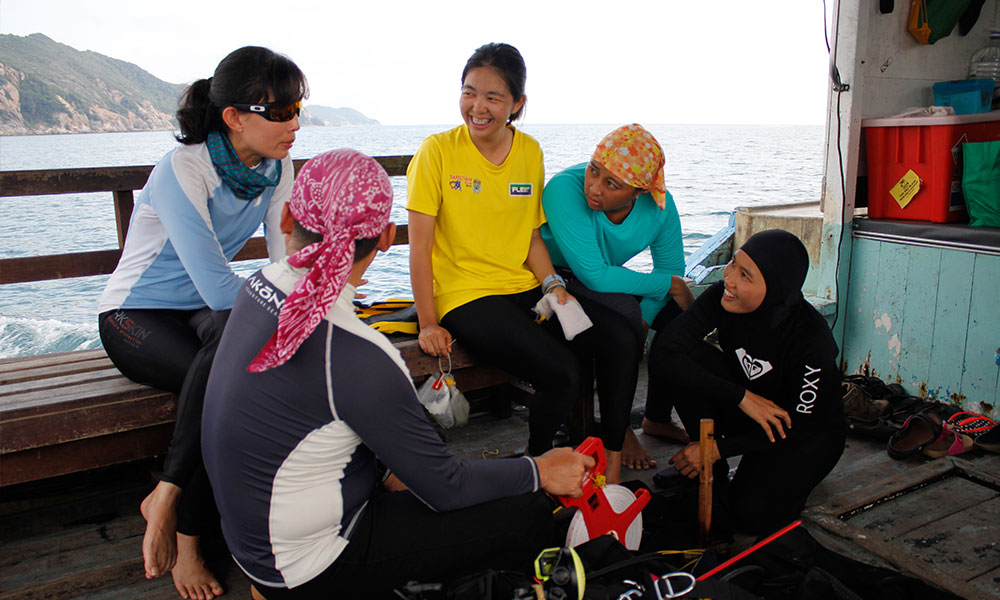
After about two years of no fieldwork, Ooi said her hair had never been this soft and her complexion never this fair.
“Before the lockdown, I would be sunburned all the time because I was usually out there (in the field).
“But for two years, it was very sad and unusual for us to not be sunburned and not feel seawater on our skin or hair. My hair became so soft because I was not in the sun,” she said with laughter.
Now that everything is slowly reopening due to the shift towards endemicity, Ooi said she has returned to the field intensively to make up for the past two years.
Cultural immersion
The scientist is also already planning on how to go about creating the multi-disciplinary gamelan piece to promote the importance of seagrass, as part of her Pew Marine Fellowship.
It would include hiring choreographers, songwriters, composers and so on, she said.
“I’m going to bring all my performing arts friends to the field and make them stay there with me for five days, talking to the villagers, the fisherfolk, to go and see seagrass every day.
“I call this cultural immersion, immerse the performing arts people in the seagrass and the community and then we brainstorm on how we can create a multi-disciplinary performing arts piece to tell this story together,” she said excitedly.
She was especially delighted that Pew agreed to her gamelan proposal as she had never been able to do this kind of project previously without the funding.
“Only Pew can give enough funding for this kind of work. I didn’t want to ask my performing arts friends to do it for free or for low pay because that is often the case with performing arts in Malaysia.
“But with the Pew, I put in funding, I have to pay all of this performing arts people in a very fair way and the Pew people actually agreed, so I was so delighted,” she added.
Science inspiring art and vice-versa
It may seem a bit unusual to mix science with the arts, but it comes very naturally to Ooi, who said she finds inspiration for her music from her work in the ocean while researching seagrass.
A lot of her gamelan compositions have come to her while she was in the sea, she said, including her last piece titled ‘Mantera Nelayan’, which was later nominated for an award.
“I actually got the main melody for that piece when I was diving in the seagrass meadows and I could hear all the sounds of the clams and the shrimps and I immediately got a sort of melody running through my head.
“As soon as I got out of the water, I had to sit down and write down the melody very fast,” she added.
Ooi hopes that with her next gamelan piece on seagrass, there will be even more of a crossover between the performing arts and marine science, as there are not enough performing arts addressing environmental issues.
“I think it is because we have not been exposed enough to it so there is no conversation between the performing arts with scientists. It is like they are separate realms.
“If we bring them together and can have conversations together, I truly believe we will see more crossovers. We will see science inspiring performing arts and also performing arts inspiring science.
“That’s the whole point of me trying to do this gamelan side project under the Pew,” she said.
Malaysianskini is a series on Malaysians you should know.
Previously featured:
No job too small or big for writer, baker, undertaker Hasrul Rizwan
Law of science: From entomologist to environmental journalist
Special needs mom brings adaptive apparel to forefront of M’sian fashion
Howzat - Winifred Duraisingam bowls them over in women's cricket
The teacher who brings tech into rural Tamil classrooms and beyond


Are you sure you want to delete this comment?
This action cannot be undone.